The world’s “decision-makers” gather in Davos, Switzerland this week for the World Economic Forum meeting. I am not there but one of my staffers is attending. You need to keep your press pass active and current.
Donald Trump flies in tonight, with the largest and most senior U.S. delegation in Davos history, “seeking to dominate this year’s World Economic Forum” says one White House insider. Prepping for a showdown summit with NATO allies.
And judging by Trump’s actions overnight, the Western alliance really is hanging by a thread.
But first, a little background on the event.
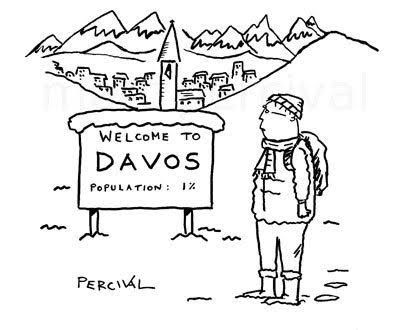
20 January 2026 – And so we are back to The Magic Mountain as the world’s decision-makers are gathering in Davos, Switzerland this week for the World Economic Forum (WEF) meeting which runs through this Saturday.
More than 3,000 politicians, executives, investors, bankers and academics will convene in the Swiss ski resort, which does not include the thousands of behind-the-scenes media, support staff, technicians, etc. Those number 5,000+ Swiss Armed Forces personnel, about 200 police from the canton in which Davos sits, about 2,000 private security personnel brought by attendees, about 500 journalists, and about 2,000 people employed by the WEF.
It is the 56th edition of this conference and the main theme is a doozy: “A Spirit of Dialogue”. Good luck with that. There are scores of panels and presentations on our “polycrisis risk attacks”, including what are going to be some bangers on artificial intelligence and cyberwar and Ukraine. Jack Nimba of Bloomberg Television probably said it best over the weekend:
“This is a crunch-time that leaders are facing, that they’re totally unprepared for. It’s polycrisis, a world on fire, too many things happening all at once”.
And besides all of the official events, programs and food feats at the main venue, there are hundreds of corporate, culture, food, and political events along the promenade that cuts through the center of Davos.
No, I am not at Davos this year but a staffer is attending. I got my media pass under the old rules some years ago, and you need to stay active. And it’s expensive but we defray the cost a bit by bunking-up our lodging and meals with media partners.
I have attended 3 times. The first time under a “purple badge”, the badge reserved for technicians who work behind the scenes. It was courtesy of a long-time media client who let me attend as a “bag carrier”, pretty much, but it afforded me a chance to network a bit, jamming myself into program events best I could. The next two times was as a member of the press after a looooooooong, multi-year application process to get a media badge. I’ll explain the badge hierarchy in a moment.
WEF can be a bit overwhelming. Primarily attended by middle-aged men. Although the WEF speaker roster is now 31% female, overall female participation (attendees) is only 22% women.
And yes, “Davos Man” is lost in a blizzard of complexity – plutocrats and politicians who still rule the world have been given a shock over the past year by artificial intelligence, climate change, the war/genocide in Ukraine, the war/genocide in Gaza – and the advent of Trump 2.0.
Samuel Huntington must be laughing in his grave. More than 20 years ago the prescient political scientist popularized the term “Davos Man” in an 2004 essay. And he was not being complimentary. He coined the phrase to symbolize the “emerging global superclass.” His essay on this trope was titled “Dead Souls.” The rootless, denationalized elites, he argued, were out of touch with ordinary people’s yearning for tradition and community. In Huntington’s vision, the people gathered were the problem, a condescending cabal that sought to impose its homogenizing will on the world.
And that at Davos, the rich would always talk about “global threats”, but remain silent about the biggest of them all – economic inequality that was at the heart of all humanity’s major problems, but the wealthiest would refuse to confront a system that benefits them.
For me, WEF remains a tsunami of content and fascinating conversations that all seem interesting … even those you simply overhear but which you are just not part of. I’ll conclude with my thoughts on the event . . . and what Trump 2.0 will do to the event . . but first a little background on the structure of the event.
BADGES
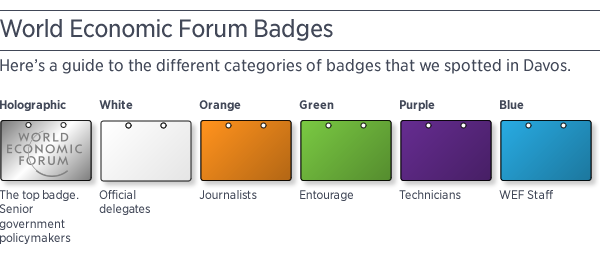
Life in the Congress Centre is ruled by the color of your badge (except for actual ministers and leaders who cruise the halls badgeless). In Davos, as an attendee, you are either white, orange, purple or green. Blue is the WEF staffers.
White badges open all doors and are generally given out to corporate executives, government officials and media leaders. Holders of white badges can attend the hundreds of sessions, lunches, dinners and night-caps, as long as they sign up through a dedicated app beforehand. White badge life is strictly off the record.
Most journalists operate with the orange badge, which offers limited access to the Congress Centre and surrounding hotels. Still, reporters get unparalleled proximity to the world’s most powerful with the orange badge but are blocked entry to VIP rooms and special meeting areas.
Purple badges are for technical workers, while green badges go to the entourage of top officials.
Obviously the most coveted badge in all of Davos is one with a shiny holographic sticker on it — despite the fact that most attendees, and even some Forum employees, don’t actually know what the sticker actually means. It’s seen on the badge of every head of state, so some people thinks it means you are a head of state. It doesn’t. In fact, the shiny hologram grants you entry to the hyper-exclusive Davos-within-Davos known as IGWEL, or the Informal Gathering of World Economic Leaders.
To get in, you need to be a senior government policymaker — think finance minister, or trade minister, or one of their sherpas — or one of a very select group of WEF employees.
And in fact the exclusivity does seem to help: if anything useful has ever been achieved at Davos, it has probably been achieved at IGWEL, which remains one of very few occasions where international politicians can meet informally, off the record, to talk about their biggest aspirations. Mexican president Carlos Salinas once said that the idea of NAFTA first emerged at an IGWEL. It’s where Greenland will be discussed. But normally nothing ambitious emerges each year: the politicians spend more time commiserating than conspiring.
THE COST TO ATTEND DAVOS

Here is the approximate cost to attendees for mingling with the swells at Davos. You pay in Swiss francs but I have converted everything into U.S. dollars :
• An annual membership to the World Economic Forum (required if you want to buy a ticket to Davos) starts at $62,000 and can run to $660,000. It’s a function of your “level of engagement” at Davos – what entity you are. But you must have an annual membership to get a ticket. A ticket to Davos itself costs $28,000 but the WEF waives the fee for all attendees who are not there to represent a business. NOTE: only businesses pay to attend the event.
• The crappiest hotel rooms are $500 a night, and a private chalet costs $140,000 for the week. The good hotels raise their prices to five times their normal rate during the conference. We used to book an Airbnb for 3 years in advance and that averaged out to $100 a night. But we had to pay for the whole three years in advance. Now we share accommodations with media partners.
• If you want to go to the private industry sessions, which everyone here agrees are where the real value is, you have to become an “Industry Associate,” which costs $145,000 a year.
• If you want to bring a colleague, you can’t just buy another ticket for $28,000 — you have upgrade your membership to “Industry Partner,” which costs about $275,000.
• And that’s just the cost of the conference. If you want to throw a party at Davos, which every self-respecting corporate attendee does, it will set you back at least $350 per guest (I had a long chat with two of the catering companies that handle Davos). And you have to get here, which will cost you $1,000 – $100,000 depending on what size plane you fly in on (commercial or private) and whether you want to drive from Zurich or fly in a helicopter ($4,000).
So it’s no surprise that some companies spend millions on the Annual Meeting each year, as a senior executive at one big Davos sponsor told me.
SECURITY
The WEF was founded on 24 January 1971 by German engineer and economist Klaus Schwab. He choose Davos because it was small, intimate – the presentation venues and hotels were in close proximity. But as the event grew in importance and the level of its attendees grew (more heads of state) and geopolitics reared its ugly head, security became paramount. The town remans small with limited access to it, so easy to protect.
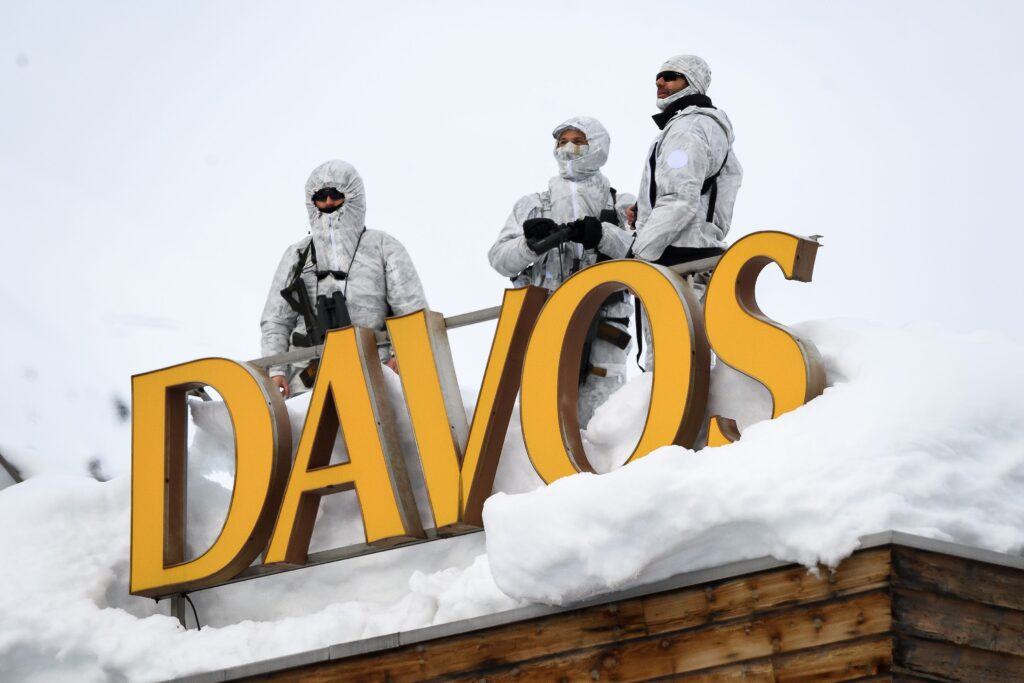
As such, security is both conspicuous and discreet in Davos. The town goes into lockdown for the week of the event, and security is very high. Snipers sit on roofs and police with automatic weapons and guard dogs blockade the roads. The Swiss army provides aerial support while security officers trample through snow to guard the buildings’ perimeters. Security checks are constant – badges on personnel, vehicles, all bags, and continual vigilance on access roads into the area. It is obviously extremely tight within the main Forum too, known as the Congress Center. I remember being checked 4 times before I was able to actually enter the Congress Center.
The Forum is held in the Swiss state of Graubünden — the Canton of Grisons — and the regional government is in charge of security rather than the country’s Ministry of Defense, although the local authority can ask for help from police teams outside the state as well as from the Swiss armed forces, which do attend the event.
Members of my intelligence community tell me a very sophisticated electronic surveillance system is in place, run by Swiss authorities but in co-operation with Western intelligence services.
The total cost of security has been estimated to be about $20 million.
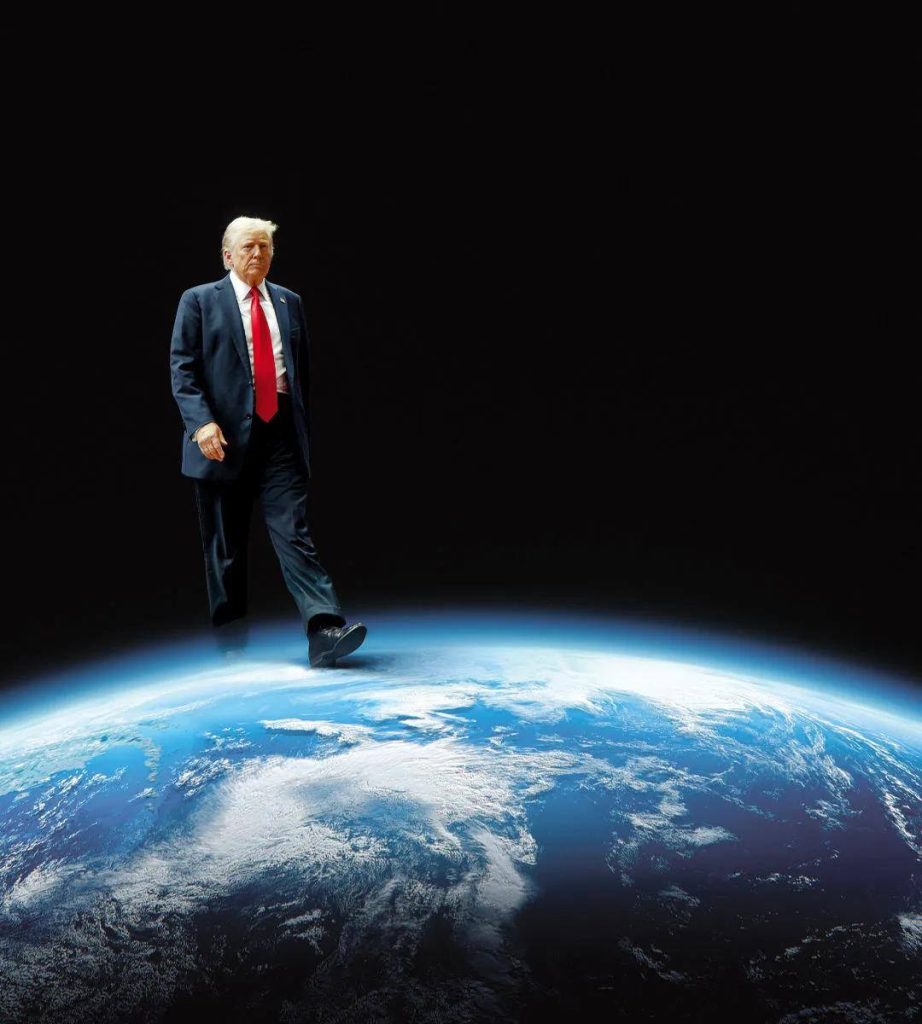
If Donald Trump had wanted to throw a hand grenade into the World Economic Forum, he couldn’t have picked a better way to do it than to threaten NATO allies with tariffs if they didn’t acquiesce to an American takeover of Greenland. And last night saying “there is no going back. America will have Greenland”.
Instead of rolling up to a cozy gathering to discuss the economy and strike deals, delegates have arrived at a conference roiled by a transatlantic crisis that threatens to undermine NATO and the Western order that has kept Europe safe since the end of World War II.
As the conference gets into full swing, my staffer tells me the streets of the sleepy Alpine village have become clogged with blacked-out SUVs and people dressed in designer gear or corporate suits. The shops and businesses that would normally line the main promenade are nowhere to be seen, their signs replaced by temporary storefronts for the corporate and governmental sponsors paying top dollar to rent them out for the week. Branding for Meta, Salesforce and Deloitte sits alongside Invest India and Africa Collective, with their staffers handing out freebies ranging from hot chocolates to crampons that can be strapped over boots, dress shoes, or — as one stylishly clad delegate demonstrated as she navigated one of Davos’ more unforgiving icy streets — high heels.
Meanwhile, an army of support workers silently keeps the whole thing going. Cleaners vacuum up snowy slush from the Congress Center’s carpeting. Coat checkers oversee an endless rotation of snow boots, suitcases and designer puffer jackets. And attendants materialize to whisk away empty glasses or mop up spills.
It looks like business as usual, but Trump’s actions toward Greenland have changed the cadence of this year’s event. Yesterday, U.S. Treasury Secretary Scott Bessent held the first U.S. briefing outside the USA House in Davos. At the opening ceremony Monday afternoon, Bessent said:
“Given the style of the U.S. administration now, I would expect a big bang on the day Mr. Trump arrives on Wednesday”.
Many had expected this summit to focus on Ukraine, with Russia cast as the EU’s main adversary. Instead, talk is swirling around the danger posed by the United States. Greenland is an issue for those who have the skin in the game, those countries that have been explicitly targeted by the Trump administration.
But for Poland, Russia, not the U.S., remains the utmost concern. Officials from Ukraine have been left scrambling to keep the attention of delegates, with European leaders consumed by the unraveling transatlantic relationship. A meeting between Trump and Ukrainian President Volodymyr Zelenskyy had been expected to be the geopolitical centerpiece of this year’s conference. Instead, it remans “unscheduled”.
Representatives from Kyiv are focused on getting the message out irrespective of what the circumstances and conditions are. This full-fledged invasion has been already four years. But, of course, as we have seen, there’s been different news cycles over these four years. Nobody can control that.
Trump’s Greenland moves are just adding a new complicated issue to the Davos agenda. The situation is “unpredictable” say many people not exactly understanding what will be achieved and who wants what. But . . . off the record . . . many say Trump will get Greenland.
As for the speech Trump is expected to deliver on Wednesday, some have noted that the U.S. president’s previous interventions at Davos had been kind of positive and polite.
This time around, nobody expects positive and polite.
AND THE VALUE OF DAVOS?
And I am no fool. I look just at climate change, where the WEF has made net zero progress. Those endless debates about climate change that have been a feature of the program for years were prescient — take a look around, climate change is literally happening before your eyes, kids.
Or the bullshit that the Davos crowd crows about – that technological solutions and capitalism being the way out of any crisis. That’s worked out well.
Or all those conversations (most likely only in passing, and probably on the margins of the official program, if even discussed) about the tremendous monopoly and monopsony power of their companies, the ability to play one jurisdiction against another in order to avoid taxes, or how to ban organized labor in their companies, etc., etc.
But whether you think the World Economic Forum is a worthy enterprise or a bunch of baloney and just fat cats whining, it’s an extraordinary creation. It is a tsunami of content and fascinating conversations that all seem interesting but, as I noted, of which often you are not part of.
And it is due to one fundamental underpinning in all of this: the accelerating volume and velocity of information. Cultures, institutions, and individuals are, among many other things, information-processing mechanisms.
For that reason alone, WEF is an education in information dynamics.