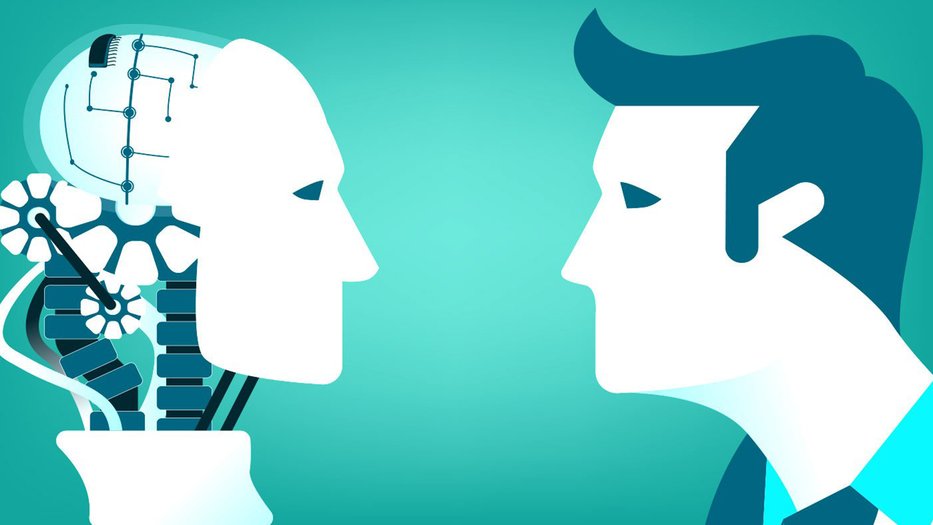
Even with the rapid advancement of Artificial Intelligence, the human element remains paramount, acting as the necessary pilot, ethical anchor, and creative force behind technology. While AI excels at processing data and automating repetitive tasks, human judgment, empathy, and creativity are irreplaceable for navigating complex, ambiguous, or high-stakes scenarios.
21 March 2026 – My love of astronomy started as a kid growing up in New York City – frequent trips to the Hayden Planetarium, a premier scientific institution known for its immersive Space Shows.
But my true delight was trips we made to an aunt and uncle who lived in Florida near Cape Canaveral which was the location of NASA’s launch complex. My uncle worked there and often got me into the facilities. It was a wonder. I watched many a launch, live, and got to meet space scientists and engineers and even a few astronauts-in-training.
I became fascinated by astronomy, going through a series of telescopes and making multiple visits to planetariums and observatories around the U.S., and eventually across Europe. It resulted in my completing a minor in physics at university.
The passion continued. I followed with delight the European Space Agency launch of Rosetta, with Philae, its lander module, and its subsequent landing on a comet 10 years later.
ROSETTA! IMAGINE! A space vehicle launched in March 2004 … with technology on board that had been developed in 1999 and 2000 (space technology usually takes 4-5 years of testing until proven before put on board a spacecraft). It then landed, as planned, 10 years later – with 92% of its technology working.
My fascination continues to this day. In one of my visits to CERN in Geneva (home to the Large Hadron Collider), I attended sessions to learn how to write computer code to track planets and stars … and to learn the basics of observatory science. Every year at the world’s largest industrial fair, the Hannover Messe, CERN and the European Space Agency always present wondrous technologies they have developed, many that could find applications in space.
So in all of this talk about humans and AI I am reminded of Gordon Cooper.
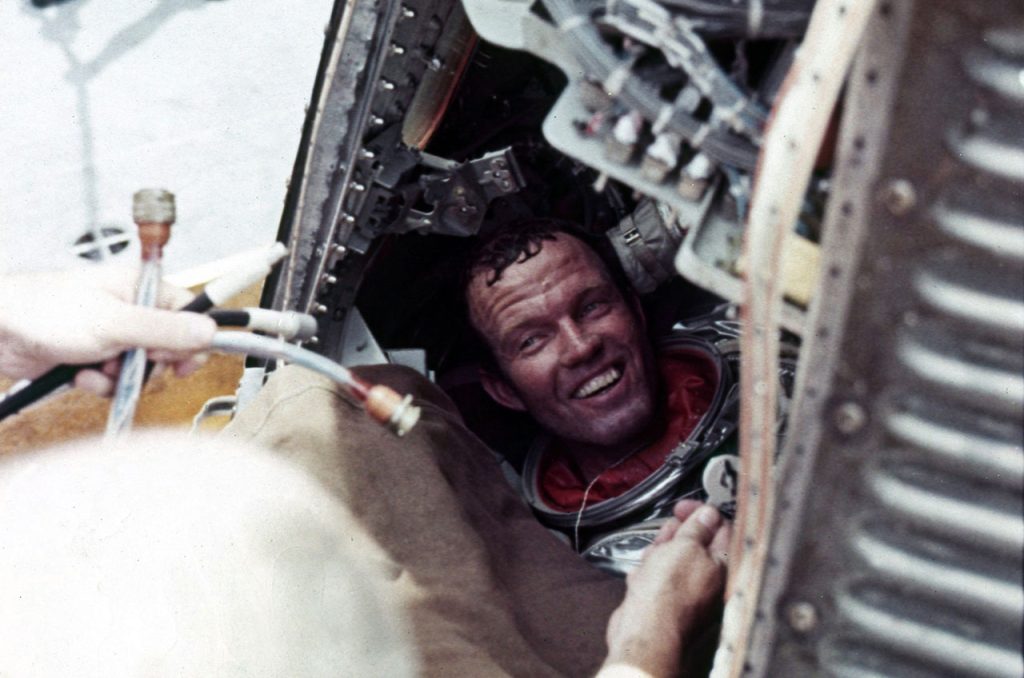
Gordon Cooper was the youngest of the seven original astronauts in Project Mercury, the first human space program of the United States.
It was May 16, 1963. Cooper was orbiting Earth alone inside a capsule barely big enough to turn around in, moving at 17,500 miles per hour. He had been up there for over a day. It was the last of the Mercury missions.
Then the warnings started.
First a faulty sensor screaming that the ship was falling — it wasn’t. He switched it off. Then something far worse: a short circuit knocked out the entire automated guidance system. The one that kept the capsule steady. The one that was supposed to bring him home. Without it, reentry was nearly impossible.
Too shallow an angle and the capsule would bounce off the atmosphere back into space. Too steep and it would incinerate. The margin for error was razor thin — and every computer that was supposed to hit that margin was dead.
Down on the ground, NASA engineers watched the telemetry in silence. They could see everything going wrong. They could fix nothing.
But Cooper didn’t panic.
He uncapped a grease pencil and drew lines directly on the inside of his window to track the horizon. He looked up at the stars he had spent months memorizing and used their positions to orient the ship by eye.
Then he set his wristwatch. Because when you have no computers left, you become the computer.
At exactly the right moment — calculated in his head, confirmed by the stars outside — he fired the retrorockets. The capsule shook. The sky turned to fire. For several minutes, no one on Earth could reach him as plasma swallowed the ship whole.
Then the parachutes opened.
Faith 7 (his name for the capsule before he was launched) hit the water just four miles from the recovery ship – the single most accurate splashdown in the entire Mercury program.
The man with a wristwatch and a few pencil marks on a window had outperformed every automated system NASA had.
We talk a lot about technology saving us. And it often does. But Cooper’s story is a quiet reminder that behind every machine, there still has to be a human being who can look out the window, think clearly under pressure, and decide what to do next.
The final backup was never the software.
It was him.