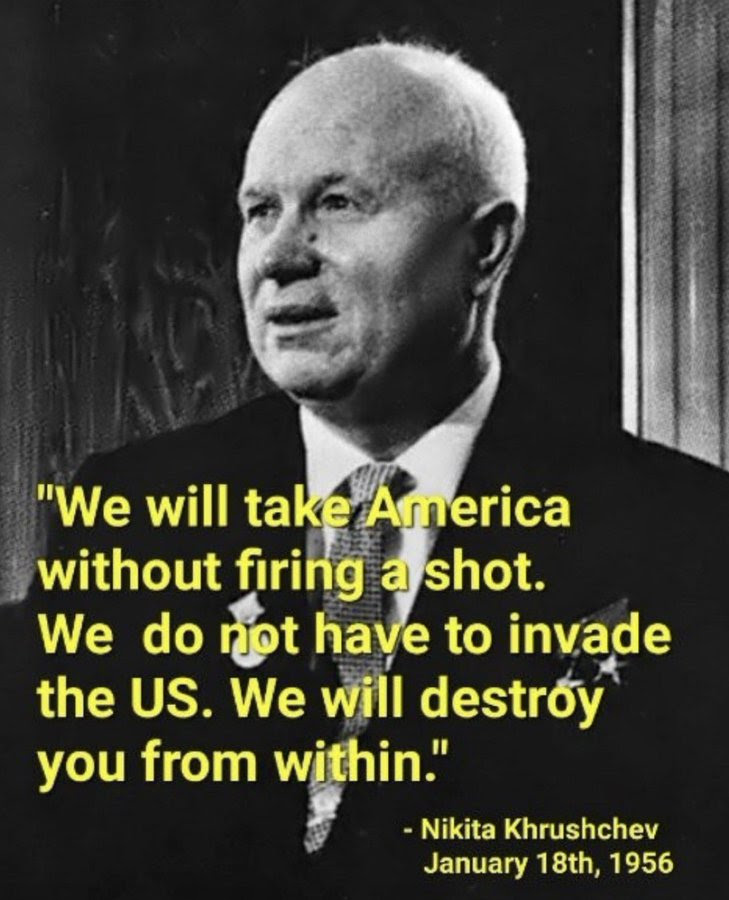
I can’t think of another example of a global power so demonstratively burning its assets and destroying its influence, in a single document
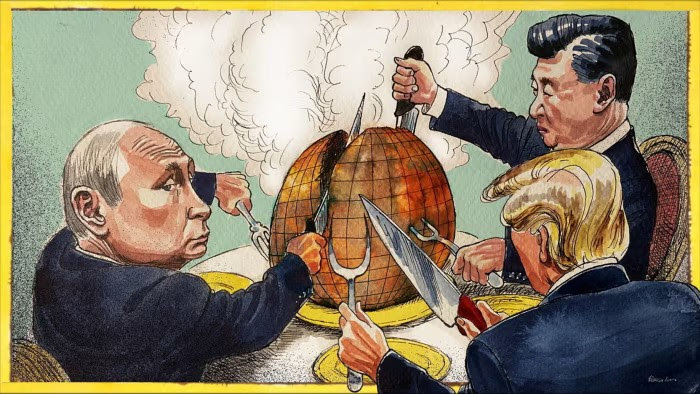
6 December 2025 – If you do this stuff for living (I do), you have been holding your breath for the release of a slew of strategy documents by year end, and into the New Year: the “National Security Strategy”, the “National Defense Strategy”, and the “Global Posture Review”.
Across the capital and beyond, reporters sharpen their pencils and analysts polish their talking points, expecting these documents will finally reveal what this administration truly thinks about the world.
Thursday night’s release of the “National Security Strategy” (NSS) did not disappoint. Well, maybe by the content but certainly not by the thinking revealed.
Each new administration’s strategy dump supposedly brings its moment of revelation. Normally … normally … the arrival of the documents triggers an entire choreography: embargoed briefings, instant reactions, panels titled “Decoding the New Strategic Vision.” Think-tank calendars fill; editors commission op-eds. We watch it unfold with a mixture of detachment and dread.
These texts allegedly never really define policy. They are bureaucratic theatre for an audience desperate for order amid what is only chaos. Still, you will need to read, interpret, and comment. There are deadlines to meet and mouths to feed.
The documents are usually a dense blend of slogans and generalities, leavened with a dog whistle or two. “America will deter, compete, and prevail”. And “Its leadership is indispensable, its values eternal, its adversaries opportunistic but containable”. The prose will hum with vague purpose but propose nothing specific.
Not this time. No embargoed briefings, no forewarning, no instant reactions. They just dropped it online at 11pm Thursday night.
And its import we should have expected it. The Trump administration foreign policy is improvisation tempered by corruption — a shifting mix of instinct, grievance, and spectacle.
Because Trump has strangled reason, shot truth, stabbed decency and inverted reality.
And he has had a lot of structural help. Excessive consumption is glamorized, environmental limits are blithely ignored, sadism has become a media spectacle and the truth holds little value in our age of distraction. It is no mere coincidence that as the facts of our world become ever bleaker, our technology and popular culture increasingly encourage a flight from the demands of reality.
In a nutshell, as far as Europe, the new “U.S. National Security Strategy”:
• blames “undemocratic” European governments for failing to make peace with Russia
• takes a pro-Russian position on NATO
• reflects white nationalist views on European demographics
• pledges overt support for far-right parties, speaking openly about its intention of “cultivating resistance” within European societies
• wants not a European Union but a “group of aligned sovereign nations” rather than a supranational project
It reads as if it was written by the Kremlin and handed off to the White House. Putin could not have hoped for more.
We had a pretty vacuous meltdown over Vance‘s cultural war stuff in the Munich Security Conference speech this past February. That is now all over the NSS as well. On steroids.
And Europe is fucked. It must now discuss how it gets to a concrete timetable on Europeans taking over critical enablers for European defense from US – Europe has until 2027 pursuant to the timetable imposed by the U.S. – so it has no time to be “outraged” that the current U.S. government aligns itself with the cultural stance of the rising ultra-right political forces in Europe. The failure of European elites to muster a convincing response to the rise of new political forces poses the gravest risks to its democratic system as is.
And the prospects are not bright. Not a single critical word about the U.S. by any European leader, on a day it announces an organized plan to destroy European democracy and society. We have a serious problem in Europe. The syndrome of the colonized mind.
But all of this makes sense. Trump’s vision of the world is not one of great-power competition but of great-power collusion: a “concert” system akin to the one that shaped Europe during the nineteenth century. What Trump wants is a world managed by strongmen who work together – not always harmoniously but always purposefully – to impose a shared vision of order on the rest of the world.
Let’s get into the weeds a bit. Petabytes have been written, are being written, will be written about the NSS. I just want to highlight what I think are the major points.
But my biggest take-away, which I have noted several times over the past 3+ years, is that we take for granted the degree of (relative) peace we’ve enjoyed over the past 8 decades. We think that’s the norm. The norm is actually a lot more like what the world looked like before 1945.
Because as I have noted so many times ad nauseum: the emergence of liberal democracies was associated with ideals of liberty and equality that seemed self-evident and irreversible. But we know now those ideals were far more fragile than we believed. Their success in the 20th century depended on unique social, political and technological conditions – that have now proved ephemeral.
I don’t think people are ready for the world we’re moving into.
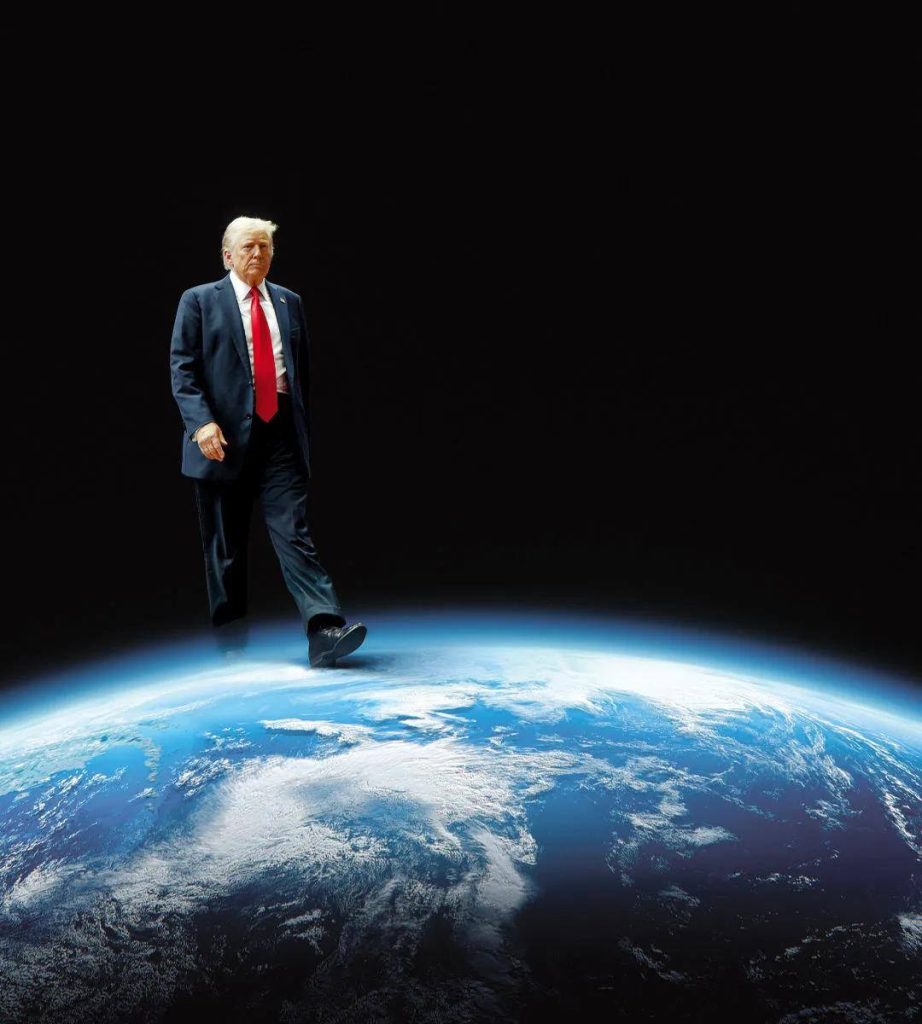
I’ll lead off with just a few paragraphs from the NSS, with some brief comments, and then get into more detail farther below:

The strategy says the U.S. will maintain balances of powers to prevent “the emergence of dominant adversaries”. So how does that square with a peace in Ukraine that sells Ukraine down the river and gives Russia a strategic victory?
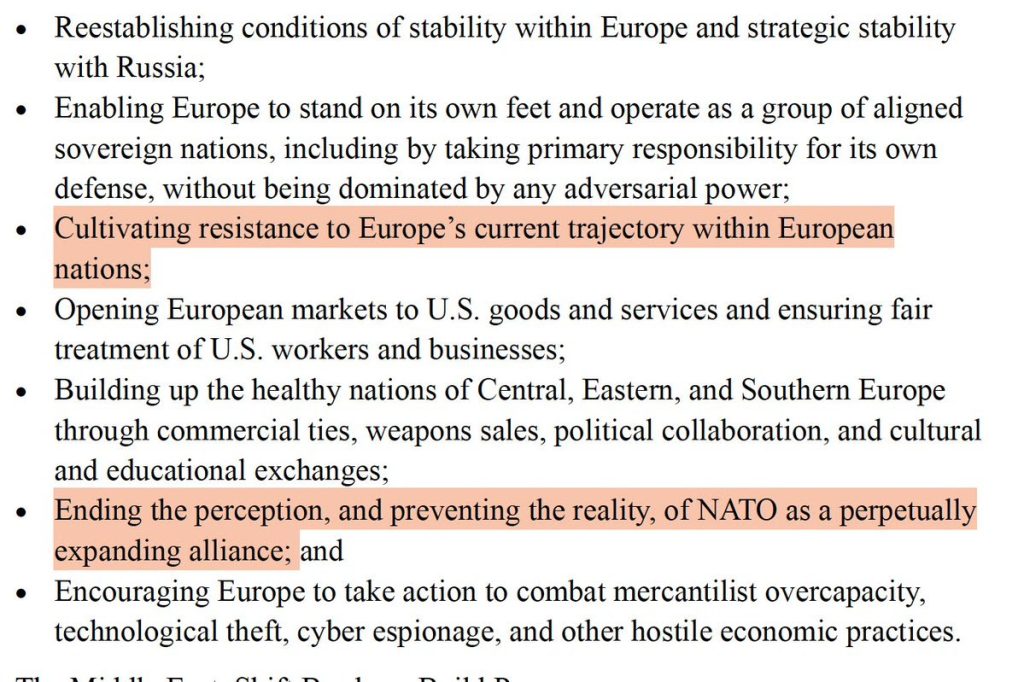
An outright pledge to support far-right parties. And NATO is dead.
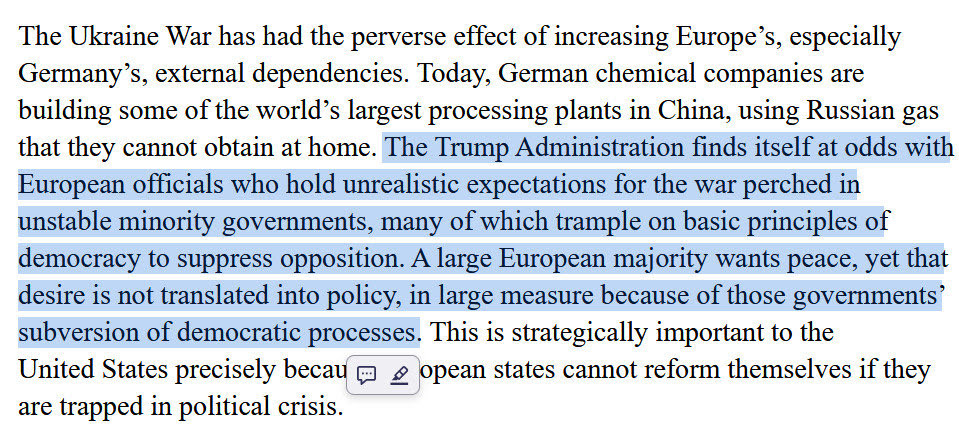
It basically reads word-for-word Putin’s strategy toward Europe. View Europe as an enemy, push for extremist regimes. This is official U.S. policy, folks.
I take my lead from Anton Gerashchenko, former advisor to the Ukraine Internal Affairs Minister, and an expert on European security affairs. As he noted last night, the new U.S. National Security Strategy is not another “course correction” but the dismantling of the post-Cold War consensus. The document sums up the last decades as a period of strategic mistakes and excessive ambitions, criticizes the approach of the elites “since the end of the Cold War,” and rejects the logic that American global dominance should be a natural goal always and everywhere. As he noted:
The new strategy clearly shows a shift in values: from liberal internationalism to the sovereignist-nationalist framework of “America First”. The document normalizes a world of competition between great powers and balances of power, declares the “primacy of nations” and a tendency toward non-interference, allowing for pragmatic relations with countries with other (non-democratic) systems of government.
At the same time, it is harshly skeptical of transnational institutions (such as the EU), which, according to this logic, undermine sovereignty, and proposes to “adapt” them to U.S. national interests.
As I wrote earlier this year, the U.S. de facto agrees with the idea of dividing the world into “theaters” and “spheres of responsibility” of major players, where it wants to secure key regions for itself and prevent others from dominating them.
This is most clearly seen in the section on the Western Hemisphere: “Trump Corollary to the Monroe Doctrine” and the formula for preventing “non-Hemispheric competitors” from gaining strategic assets/control in the region – a signal of American primacy in “its own backyard”.
The second main theater for the U.S. is the Indo-Pacific. Here we see an attempt at balancing with the goal of preventing China’s technological and regional military dominance. This is a strategy of deterrence through strength and technological superiority, rather than through the “export of values”. Noted Gerashchenko:
In NSS-2025, Europe ceases to be the “core of the common democratic agenda,” as it was before, and becomes the target of harsh criticism and political pressure. Europe is accused of declining economic clout (its share of global GDP has fallen from ~25% in 1990 to ~14% today) and even the risk of “civilizational erasure”.
The blame is placed on supranational bodies and policies (including migration), “censorship” and suppression of opposition, demographic decline, and the erosion of identities. In this logic, the U.S. sees the desired model as a “group of aligned sovereign nations” rather than a supranational project, and speaks openly about its intention of “cultivating resistance” within European societies.
He wants the EU dead. And once the EU institutions are dead, it’ll be easier to dictate terms to individual countries.
There is also a noticeable change in rhetoric regarding NATO. NSS-2025 criticizes the idea of NATO as an alliance that must “perpetually expand,” effectively putting a stop to the inertial open-door policy and conspicuously does not directly confirm Article 5, instead limiting itself to general references to “collective defense” and an emphasis on burden-sharing. A distinctive feature of this strategy is the combination of burden-shifting with the desire to maintain American primacy in the defense-industrial base, finance, and technology. Allies are being asked not only to “contribute far more,” but also to take on more responsibility for security in key regions of Eurasia, while the U.S. seeks to consolidate its advantage in high-tech and weapons production.
But the most notable difference is in the previous approaches in relation to Ukraine and Russia. Said Anne Applebaum:
NSS-2025 formulates the U.S.’s “core interest” as ending hostilities in Ukraine as quickly as possible in order to reestablish strategic stability with Russia, while leaving Ukraine a framework for post-war reconstruction as a “viable state.” NSS-2022 saw this differently: long-term support for Ukraine, assistance in reconstruction, and the goal of making the Russian Federation’s war a “strategic failure.”
The conclusion for European capitals and Kyiv sounds pragmatic and harsh: Washington is moving from the language of “values and common order” to the language of harsh realism.
So, today, those who are capable of being subjective are winning in the world. And the new U.S. strategy shows that the best guarantees of security are the EU’s and Ukraine’s own capabilities: military, economic, and political. And this is precisely the basis of agreements, declarations, and diplomacy. Those who lack subjectivity are, unfortunately, doomed to become a resource base.
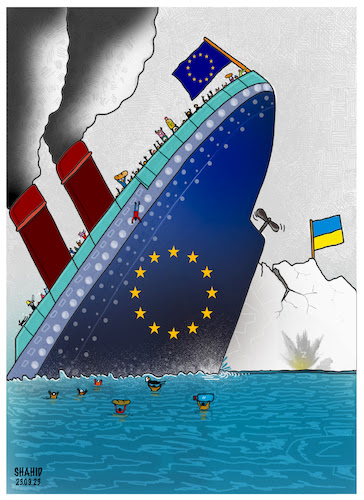
In its 33 sober pages, Washington has admitted what Moscow, Beijing and much of the Global Majority have been saying for two decades: the unipolar era is over, liberal hegemony is dead, and the United States is returning home to its own hemisphere. The rest of the world is now explicitly invited – or rather instructed – to take responsibility for its own security.
This is buck-passing on a continental scale. Aleksandar Djokic, who was a professor at the University of Russia before he managed to escape, and writes for Euronews, Bloomberg, Novaya Gazeta and other media outlets, noted:
Buck-passing is a strategy in offensive Realism where a great power attempts to shift the responsibility for deterring or fighting a dangerous rising state onto another power. The buck-passer avoids the costs and risks of direct confrontation, hoping the “buck-catcher” and the aggressor will weaken each other through bloodletting, thereby maximizing the buck-passer’s relative power.
The NSS of November 2025 does not merely downgrade China from “pacing threat” to “economic competitor”. It quietly demotes the entire Indo-Pacific to 4th place, after:
• homeland defense
• the Western Hemisphere (the Americas), and
• economic re-industrialization (a focus on American industrial renewal)
Europe and the Middle East barely merit a subsection each. The message could not be clearer: the American security blanket is being pulled back, and regional powers are expected to step forward.
In Asia, the beneficiary – and the new buck-catcher – is obviously Japan.
By openly stating that defending Taiwan is merely “a priority” (not a vital interest) and that it is “ideal” to preserve military overmatch (but no longer guaranteed as China is too strong militarily), the United States is effectively telling Tokyo: “If you want the First Island Chain to hold, you will have to do much of the holding yourselves”
Note to readers: The “First Island Chain” is the first string of major Pacific archipelagos out from the East Asian continental mainland coast. It forms a defensive arc off East Asia’s coast, seen by the U.S. as a barrier to project power into the Pacific and by China as a strategic containment line it must break through to achieve global naval reach, crucial for regional power dynamics and military planning.
Which explains Japanese PM Takaichi’s brash statement that a potential Chinese military attack or blockade against Taiwan could constitute a “survival-threatening situation” for Japan – she is trying to step up to say Japan can hold the First Island Chain on its own.
The document repeatedly insists that “our allies must step up and spend – and more importantly do – much more for collective defense”.
Translation: the post-war arrangement in which Japan enjoyed security at American expense while remaining constitutionally and politically castrated is finished.
This creates an historic opportunity for Japan to become a fully sovereign great power for the first time since 1945.
Now, whether Washington will voluntarily surrender these extraterritorial privileges is doubtful.
In other words, Japan’s path to full sovereignty over its own territory now runs through Beijing and Moscow, not Washington. The irony is exquisite: the very powers Japan is supposed to help contain may hold the keys to its liberation from the post-war order.
And in Europe? Abandonment in slow motion.
The 2025 NSS mentions Russia exactly twice – once in passing, once to say that Europe must restore its “civilizational self-confidence and Western identity”. There is no mention of NATO’s Article 5 as the cornerstone of American strategy, no pledge to defend every inch of Allied soil, no promise to keep 100,000 troops in Europe indefinitely. The message to Paris, Berlin and Warsaw is unmistakable: if you wish to manage the Russian frontier, you will do it largely with your own money and your own blood.
The Europeans, predictably, are in denial. But the mathematics are brutal. Without the American security subsidy, the combined GDP of the EU plus UK is still larger than Russia’s, but as I have detailed many time before their collective defense spending remains anaemic and their arms industries are decades behind.
The coming years will be a frantic, and probably unsuccessful, attempt to create a European pillar capable of deterring Moscow on its own. The more likely outcome is a Finnish-style accommodation with Russia or, in the case of Germany and France, a reluctant drift toward Eurasian economic integration once the American shield is visibly lowered.
This is the new geometry of power. What we are witnessing is the orderly (for now) dissolution of the American world order and its replacement by a multipolar system organized around continental spheres of influence:
• The United States consolidates an expanded Monroe Doctrine in the entire Western Hemisphere
• China dominates mainland East Asia and the South China Sea
• Russia re-establishes privileged influence in the post-Soviet space and the Arctic
• India emerges as the swing power in South Asia and the Indian Ocean
• A reluctant European bloc, possibly led by a Franco-German directorate, tries to find a modus vivendi with Russia while keeping the Americans at arm’s length
• An Israeli-Arab coalition polices the greater Middle East
Japan, the eternal outlier, faces the most consequential choice. It can cling to the fading American protectorate and remain a political dwarf with American bases on its soil forever, or it can seize the moment, negotiate with its continental neighbors, and finally become a normal great power.
The 2025 NSS is a plan for a strategic re-orientation of a power that has accepted its limits. The age of ideological crusades is over; the age of pragmatic spheres of influence has begun. America will have to invest in itself if it wants to renew its industrial and manufacturing base. The only question left is whether the former hegemon will manage its decline with grace – or whether its former dependents will force the issue themselves.
We are living in interesting times.
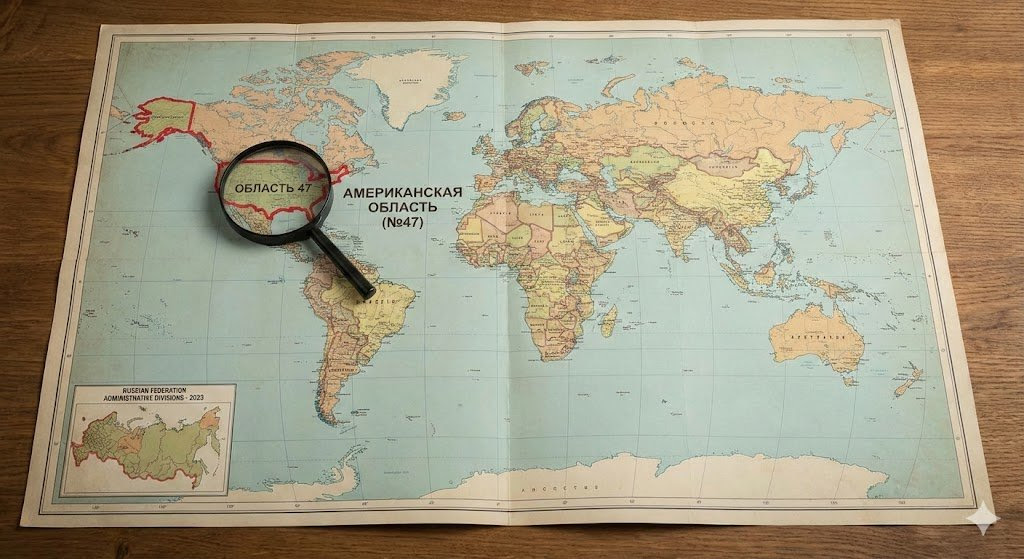
The U..S is now officially Russian oblast 47
With one key point that I have written about before, and want to mention now but time and space prevents a full discussion.
As the West celebrated the end of the Cold War, Moscow was already plotting its return. Russia cultivated and co-opted a global network of extremists, enablers, political movements, and power-seeking elites, turning far-right parties and officials inside target nations into instruments of political warfare. From Germany and France to Italy, the Netherlands, and the United States, these networks of oligarchs, propagandists, and ideologues reshaped Western politics. What began as a KGB playbook has evolved into a system of influence that now threads through governments, movements, and media across the democratic world.
Understanding this is key, because the Kremlin’s later penetration of far-right parties, conservative religious networks, and Western political movements was not a matter of opportunism or cultural grievance. It emerged from deliberate political engineering. Russia fused the moral authority of the Church with the covert reach of the intelligence services, paired oligarchic capital with extremist ideology, and blended traditionalist rhetoric with geopolitical subversion.
If time ever permits, I will pull that information together into a monograph.

The biggest problem in analyzing anything like this is that for the perspective of most, the entire post-World War II and post-Cold War order was always only ever an ephemeral blip in the grand stream of human history.
It was the result of a unique global power imbalance favoring the U.S. which was, in turn, a uniquely relatively benevolent hegemonic, or unipolar power.
But as power has diffused from West to East and to the Global South, that power imbalance has shifted dramatically and irrevocably.
The U.S. can still be a great power, indeed even the greatest single power, but it won’t be if it overstretches itself as Paul Kennedy warned about in his “Rise and Fall of the Great Powers” which puts so much of the modern world in perspective.
The new Trump NSS recognizes the strategic wisdom of Frederick the Great when Frederick commented:
“He who defends everything defends nothing”.
It also rightly recognizes Europe’s own civilizational decline and echoes Toynbee’s right comment that “civilizations die by suicide not by murder”.
Our lamentation is really over a world that was already fundamentally changing, and an order that was already fundamentally dead by the time Trump descended the escalator to run for president the first time. While the future will be more Hobbesian, this is the norm throughout human history.
It is time to realistically deal with that rather than pine away for that which cannot be resurrected.