Sometimes we’re meant to be led here and there, to certain places at certain times for reasons beyond our understanding, beyond our will or the spell of the moon or the arrangement of the stars in the sky. Maybe all the dark and eternal nameless things lurking around us have their own purpose and vision for us. Who knows?
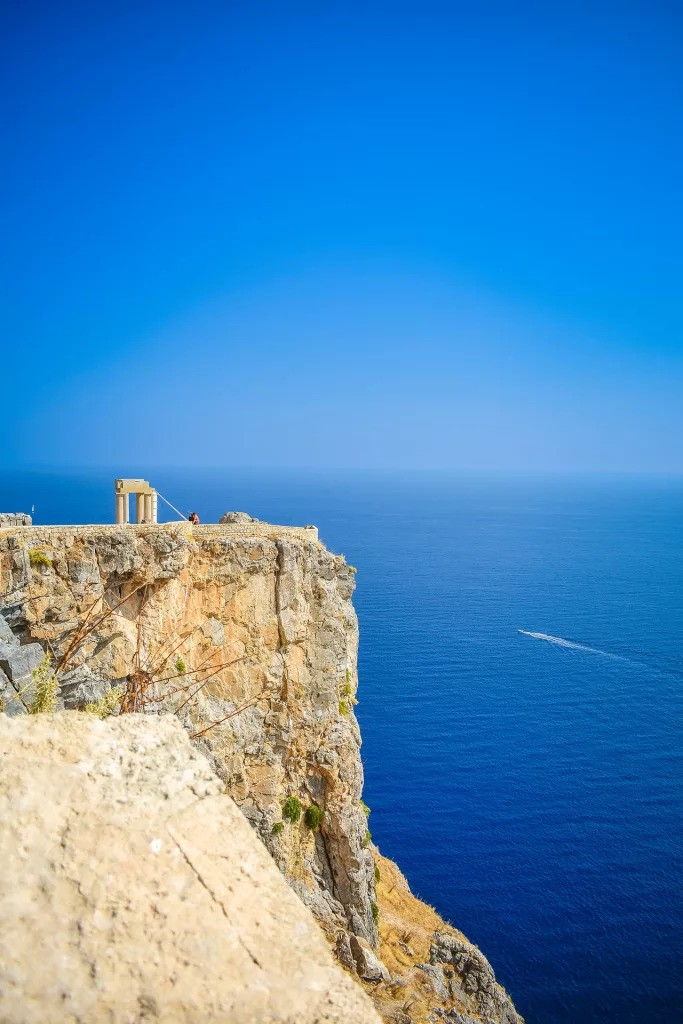
Above: the Temple to Apollo in Lindos, Rhodes
8 October 2025 (Brussels, Belgium) – After 4+ weeks traveling the Dodecanese Islands in Greece, I am back in Brussels for a bit, sloooooowly easing my way back on-line. Some brief thoughts from my travels.
The classicist Eric Havelock has argued that the arrival of literacy in ancient Greece was the catalyst for the birth of philosophy. Once people had a means of pinning ideas down on the page to interrogate them, refine them and build on them, a whole new revolutionary way of analytic and abstract thinking was born — one that would go on to shape our entire civilisation. With the birth of writing received ways of thinking could be challenged and improved. This was our species’ cognitive liberation.
The entire intellectual infrastructure of modern civilization depends on the kinds of complex thinking inseparable from reading and writing: serious historical writing, scientific theorems, detailed policy proposals and the kinds of rigorous and dispassionate political debate conducted in books and magazines. These forms of advanced thought provide the intellectual underpinnings of modernity.
If our world feels unstable at the moment — like the ground is shifting beneath us — it is because those underpinnings are falling to pieces underneath our feet.
And this is partially why I decided to take some serious time off the grid.
Sometimes we’re meant to be led here and there, to certain places at certain times for reasons beyond our understanding, beyond our will or the spell of the moon or the arrangement of the stars in the sky. Maybe all the dark and eternal nameless things lurking around us have their own purpose and vision for us. Who knows?
But my wife I toured around the Dodecanese Islands looking for an inner light, a deeper understanding of life’s complexities, of Greece’s complexities. The goal of my trip was to discover often-forgotten ancient temples and chapels and castles and fortified cities that all help explain the economic – religious – political – social mosaic that is Greece. To understand the dream (and the reality), the historical (and the mythological) of Greece – all which is so artfully blended together.
On each island we explored, we hiked the old farmer trails over hills and down to shore lines, seeing abandoned homes and fields:
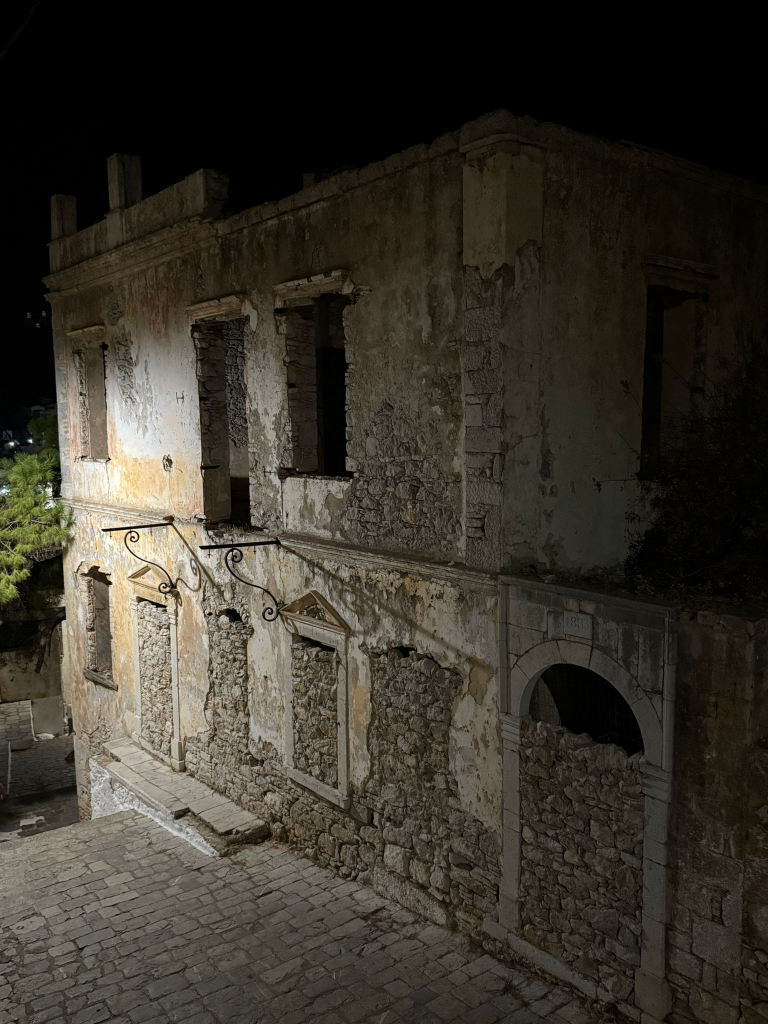
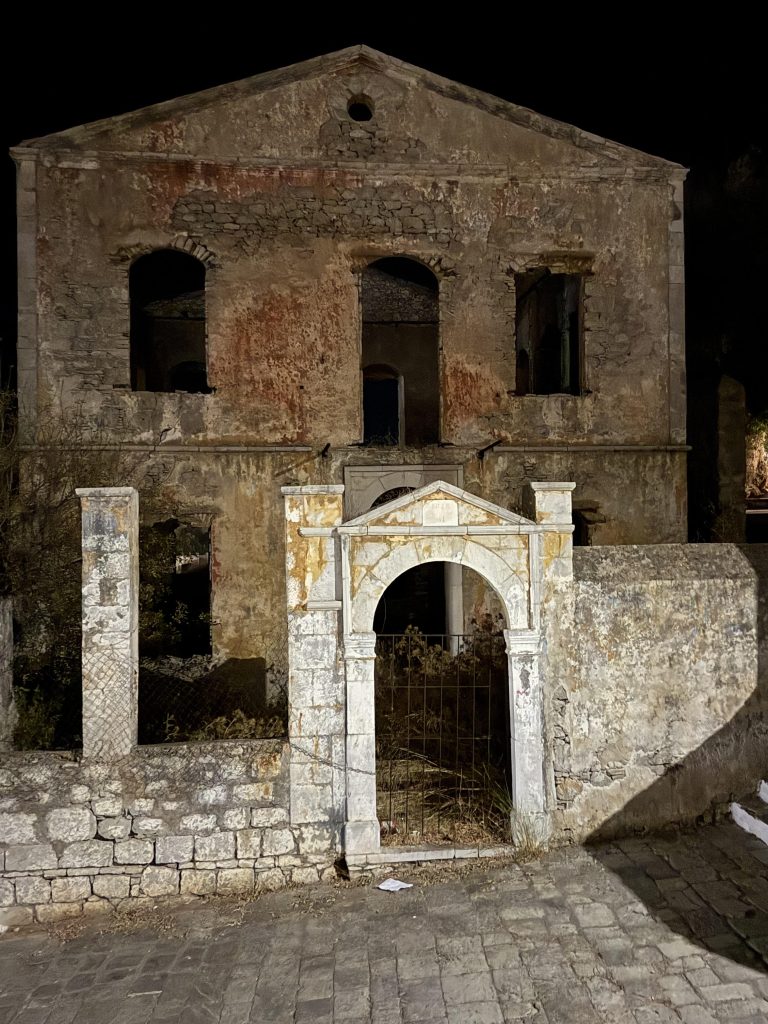
And we found abandoned neighborhoods and cities. In Symi this one neighborhood once housed 24,000 people. A few shots of the buildings:
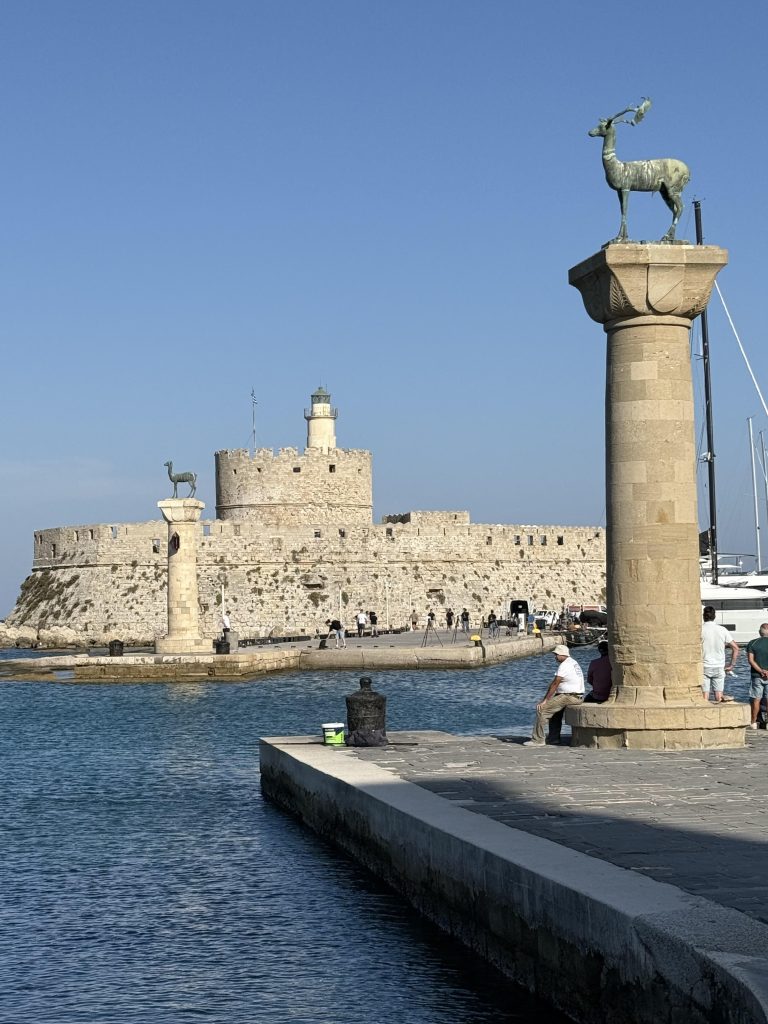
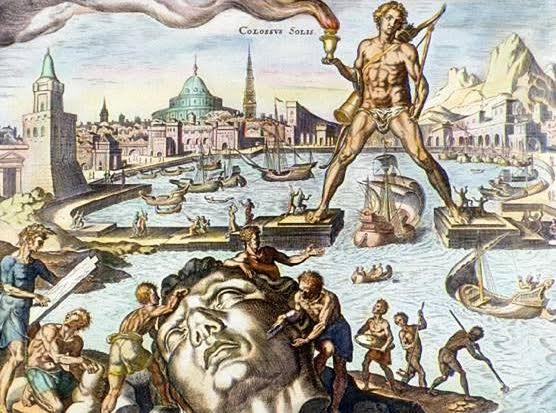
We learned the history of the Colossus of Rhodes. According to most contemporary descriptions, the Colossus did not straddle the harbor (an engineering impossibility at the time) but stood approximately 70 cubits, or 33 metres (108 feet) high – approximately two-thirds of the height of the modern Statue of Liberty from feet to crown – making it the tallest statue in the ancient world.
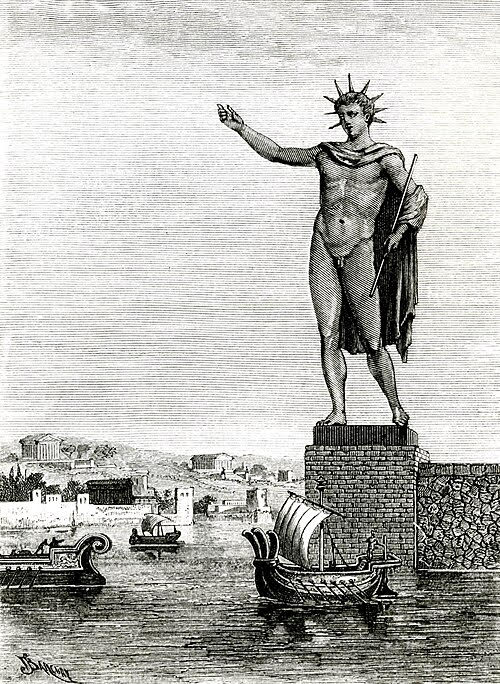
We visited the spot in the harbor where it is said to have stood:
But all of the tourist trinkets still follow the mythical version:
We learned about the amazing engineering and construction feats used to create near-perfect walls and battlements and ancient citadels located on the rocky outcrops above each major city or harbor:
And, oh, the luminous encounters along the way.
We met a Greek jewelry maker. He uses the stones/minerals found on Rhodes, and some neighboring islands, to create his own jewelry.
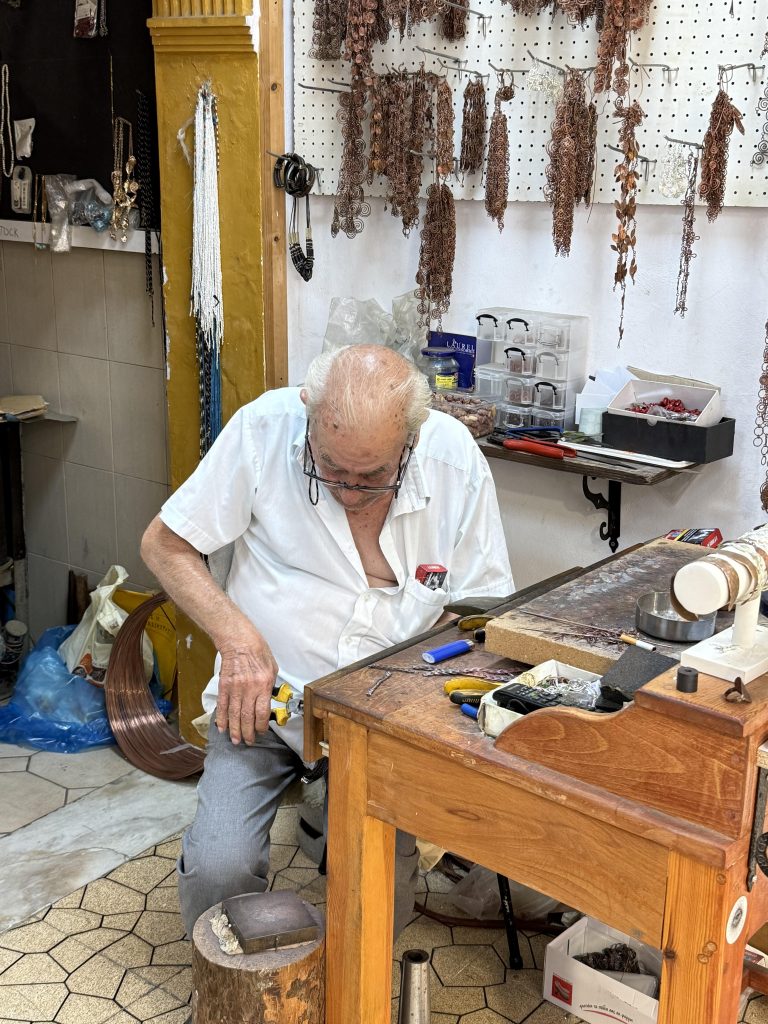
His daughters also work here, and his granddaughters are learning the trade. He created for my wife made-to-order jewelry from stones she had selected, plus gorgeous items for all our girls. Just 🤩 stuff.
And I met Stella, an 89 year old grandmother who – twice a week – clamors down a steep hill into town from her hilltop village, about 2 km (1.3 miles), to get her groceries.
She described for me the hard-scrabble life of living on an island.
And yes, my wife and I relaxed. Often finding the most delightful tavernas along the way:
After 4 weeks, two major take-aways:
1. The first is actually an old thought, and I have already written about it at length but I will revisit it shortly. This trip merely reinforced it.
The Byzantine Empire left its traces in many more ways than the classical world of Pericles. What has puzzled the West for hundreds of years has been the huge contradiction of Byzantium. It was the first empire dedicated to a Christian god. And yet it was one of the bloodiest of empires if judged by wars, palace intrigues, and civil strife within its own shifting borders.
The contradiction is real, but to focus only on this aspect of Byzantium is to miss the point of the longest lasting empire in history. Western Europe during this period— roughly A.D. 400 to 1453— developed as a territory of separate countries and kingdoms organized on feudal systems.
In Byzantium, all territory was one empire under God. Beyond that level, the family emerged as the strongest unit, quite unlike the feudal development of Europe. God and family were the twin poles of a thousand years of rule, and still are, in many ways, the orientation of modern Greeks, and people in all of the other Balkan countries. It helps explain the many fissures in “European” social and political life today.
2. The Greek government has (finally) been actively preserving and chronicling its past through a comprehensive system of cultural heritage protection, including rigorous legislation, archaeological excavations, and the integration of ancient artifacts into modern infrastructure. Much funding comes from EU initiatives. The modern preservation efforts involve digital archiving, cataloging and physically marking antique cultural sites, and advocating for the return of cultural property – all of this demonstrating a long-standing and evolving commitment to safeguarding and reinterpreting Greece’s rich historical narrative. Yes, it is a slow process, and an uneven process, and low-funded process. But many people are trying very hard, and I have met many of them.
It is why the destruction of Gaza City is a crime against history. It makes me sick. Centuries-old mosques, churches, and ancient artifacts are being obliterated as the Israeli military systematically flattens what remains of the city. Many of the Gaza Strip’s multi-civilizational treasures have already been obliterated over the course of Israel’s two-year genocide.
But Gaza City’s ancient origins, along with its centrality in the formation of Palestinian national identity and resistance against the Israeli occupation, make its ruination more than simply a human tragedy. It is one of the oldest cities in the world. The city’s history dates back many thousands of years, and it is referenced in the Book of Genesis as having been inhabited by Canaanites. Its strategic location between Africa and Asia has made it a vital port and a target of conquest for the Assyrians, Babylonians, Greeks, Persians, Hasmoneans, Romans, and Ottomans. As the Palestinian historian and former mayor of East Jerusalem, Aref Al-Aref, wrote in his 1943 book “History of Gaza” :
Gaza City was not built in a certain century, nor is it a result of a certain period, but rather of all the generations that have passed, from the day when the first pages of history were written to the present day.
That will all be addressed in another essay/film. Because the defining issue of the 21st Century is the validation of genocide and warcrimes by superpowers.
And as for Greece? I will try and capture 20+ years of travel across Greece in a new e-book I started this trip: “Yes, there is a Hades. But be mindful the gift shop closes mid-afternoon. My luminous encounters across Greece”.
I will leave you with a short clip of a sunset we enjoyed on Nisyros as a storm came in, shutting off ferry service and boat traffic for 2 days: